300W, 400W or 475W Solar Panels: What the Wattage Actually Means for Your Roof
A customer sent me a screenshot last week. A 475 W panel from our products page, next to a "400 W" panel from a camping store at a quarter of the price, with the message: "why are yours so expensive?"
Fair question. My reply ran to three paragraphs, which is a sign it deserves a proper post.
The wattage is a lab number
That "475 W" on the datasheet is the panel's output under Standard Test Conditions: 1,000 watts of light per square metre, a cell temperature of exactly 25 °C, and a specific light spectrum. It's a flash test in a factory. Every manufacturer on earth tests the same way, which is the point. It lets you compare panels.
What it isn't is a promise about your roof.
On a real Melbourne roof, a 475 W panel might hit 475 W for a few minutes on a clear, cold September morning with the sun square-on. Most of the time it's producing a lot less: maybe 350 W at midday in summer when the glass is 60 °C, 100 W under cloud, zero at night.
That's not a defect. Every panel behaves this way. The lab number is just how we measure them.
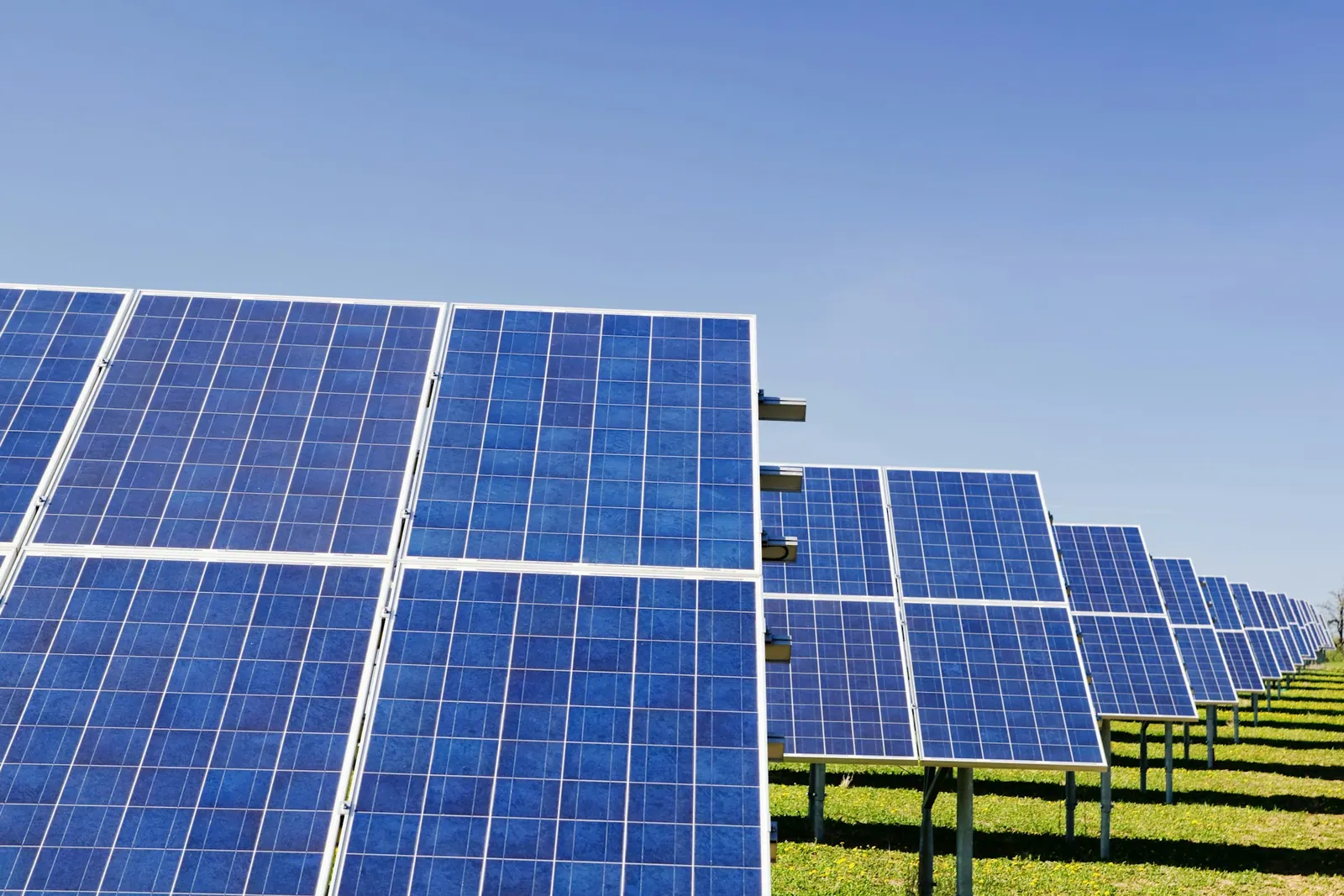
Bigger number, same-sized panel
Here's what surprised the screenshot customer. A 475 W residential panel and a 300 W panel from a few years ago are roughly the same physical size, about 1.76 by 1.13 metres. What changed is the cell technology. Newer cells convert 22 to 23% of the light hitting them into electricity. Older ones managed more like 17%.
So wattage is mostly a proxy for efficiency, and efficiency is mostly about how much power you can squeeze out of a limited roof. That's the whole game in the suburbs. If you've got a small north-facing section and shade everywhere else, higher-wattage panels let you fit more capacity where the sun actually is.
If you've got a massive open roof, honestly, it matters less. You could use cheaper 400 W panels and just install more of them.
The camping-store panel, by the way, is a different animal altogether: a portable, often flexible panel meant to top up a caravan battery. Different construction, different lifespan, no 25-year warranty, and no accredited installer can put it on a grid-connected roof anyway. Grid-connected panels in Australia have to be on the Clean Energy Council's approved modules list, and the person installing them has to be accredited too. Both are worth checking against any quote you get.
The three numbers on the datasheet that matter more
Wattage gets all the attention. On a datasheet I look at three other things first.
Efficiency. Wattage divided by panel area. Anything from 22% up is current. It's the number that tells you how much roof you'll use.
Temperature coefficient. How much output drops for every degree above 25 °C, written as something like -0.29%/°C. Smaller is better, and it matters more in Melbourne than people assume, because a black panel in February sun runs 30 degrees hotter than the air. Across a summer, that's the difference between panels that quietly underperform and panels that don't.
The two warranties. There's a product warranty (the panel won't physically fail, typically 12 to 25 years) and a performance warranty (it'll still produce at least a set percentage of its rating after 25 years, typically 85% or better). They are not the same thing. A salesperson who says "25-year warranty" without saying which one is hoping you won't ask.
Why every installer sells "6.6 kW"
You'll have noticed that every quote in Australia is for a 6.6 kW system. It's not a coincidence and it's not marketing.
The federal STC rebate rules let you install panels up to 133% of your inverter's rating. The most common single-phase residential inverter is 5 kW. Five times 1.33 is 6.65. So 6.6 kW of panels on a 5 kW inverter is the biggest system you can build around that inverter and still claim the full rebate. The whole country landed on the same number for the same reason.
Oversizing the panels like this is deliberate. Because panels rarely hit their lab rating, a 6.6 kW array on a 5 kW inverter hardly ever clips, and when it does, on a perfect spring day, the amount lost is tiny. Meanwhile you get a fatter output curve in the morning, the evening and in winter, which is when you actually want it.
So how many panels is that?
Divide. 6,600 W divided by 475 W is 13.9, so 14 panels, which is actually 6.65 kW. With 440 W panels it's 15. With the old 370 W panels it was 18, which is why older installs look so crowded.
Fourteen panels take up around 28 square metres of roof. Most single-storey Melbourne homes have that on the north or west face. If yours doesn't, this is where higher-wattage panels earn their keep.
When a bigger panel is the wrong answer
Two situations. First, weight. A 475 W panel is around 21 to 22 kilos, and fourteen of them plus rails is over 300 kg spread across the roof. Sound structures don't care. Old tile roofs with tired battens sometimes do, and that's a conversation with a builder before it's a conversation with me.
Second, the physical size. Modern panels are longer than the old ones, and on a chopped-up hip roof with valleys and a satellite dish you occasionally can't fit fourteen big ones where you could have fitted sixteen small ones. Layout beats wattage. A good designer shows you the layout drawing before you sign, and if they won't, ask why.
What that produces in Melbourne
The rule of thumb our industry uses for Melbourne is about 3.6 kWh a day for every kW of panels, averaged across the year. So a 6.6 kW system gives you roughly 24 kWh a day on average: more like 35 in January, closer to 12 in the middle of winter. The Bureau of Meteorology's solar exposure maps show exactly why, and they're worth a look if you like a good map.
An average Victorian home uses somewhere between 15 and 20 kWh a day, so on paper 6.6 kW covers it. In practice the timing rarely lines up, which is a battery conversation, not a panel one.
What I'd actually pick
The panels we install most right now are 475 W n-type panels from Jinko and Risen. Not because bigger is better in some abstract way, but because for the same install cost you get more capacity on the same roof, and n-type cells hold their output better in heat and over the years. If someone offers you a cheaper quote with 400 W panels on a big open roof, that's not a scam, it's a reasonable trade. If they offer you 300 W panels in 2026, ask where they've been keeping them.
The screenshot customer went with the 475s. Fourteen of them. She sent me a second screenshot a month later, from the inverter app this time. It read 5.0 kW, flat, for most of the morning. That's the inverter saying "that's all I've got". Clipping. On a clear day, it's the good kind of problem.
Curious if this plan is right for you?